What an AI visibility report should show: a walk-through of a real check
If your clients start asking “does ChatGPT recommend us?”, you will want a report you can hand them. Here is what a good one contains, using a real check we ran in October 2026 on Substack. It is an example check on a well-known brand, not a client, and it asked Gemini and Perplexity.
By the Citeably team · · · 5 min read
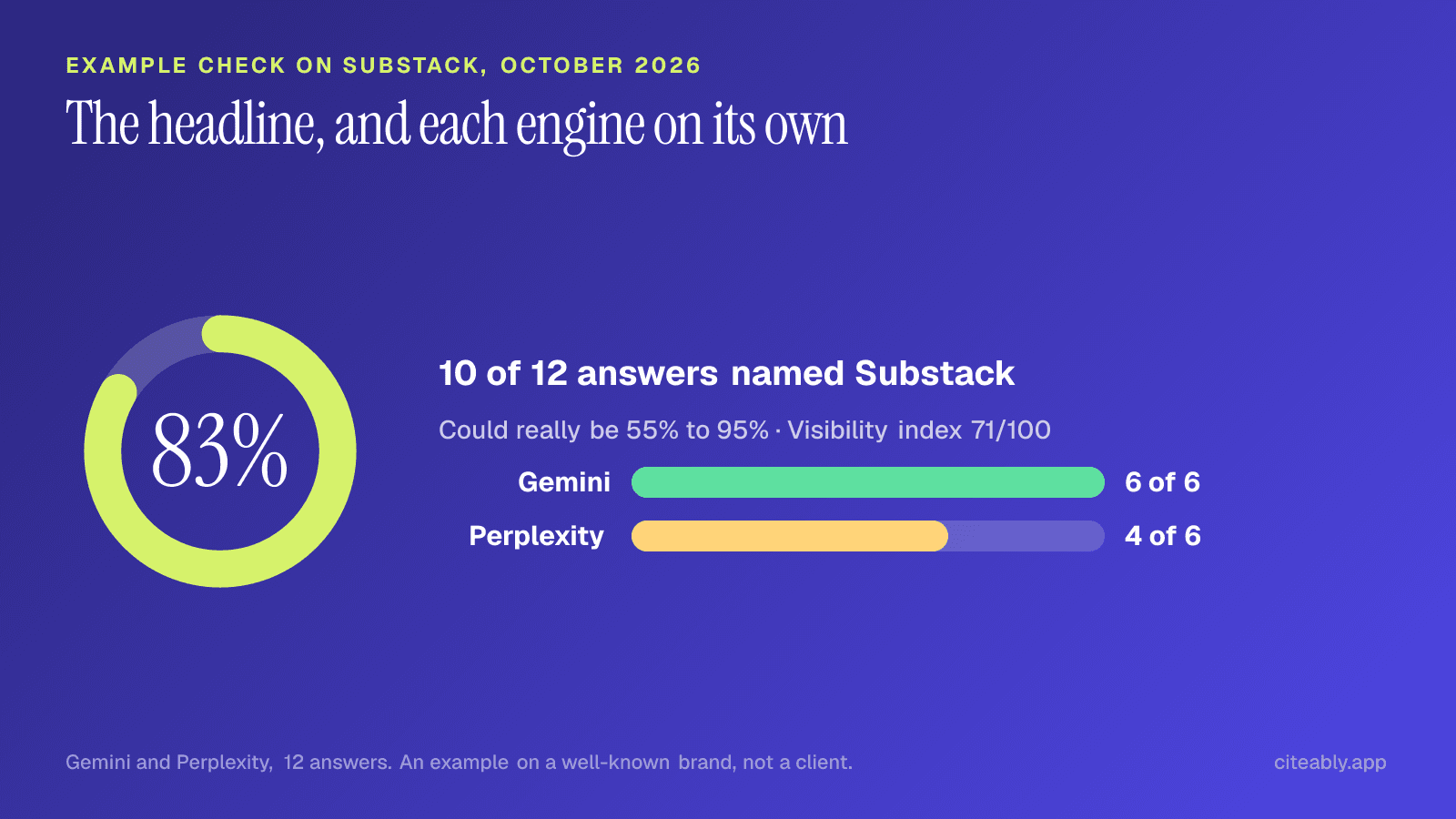
1. One headline number, with the honest range
10 of 12 answers named Substack: 83%. Next to it: “could really be 55% to 95%”. Twelve answers is a small sample, and AI answers change from run to run, so a bare percentage looks precise and isn't. A range tells the client how much to trust it.
2. Each engine on its own
Gemini named Substack in 6 of 6 answers. Perplexity named it in 4 of 6. Different assistants lean on different sources, so a single blended number hides the story. If a client is strong on one engine and missing on another, that is where to work.
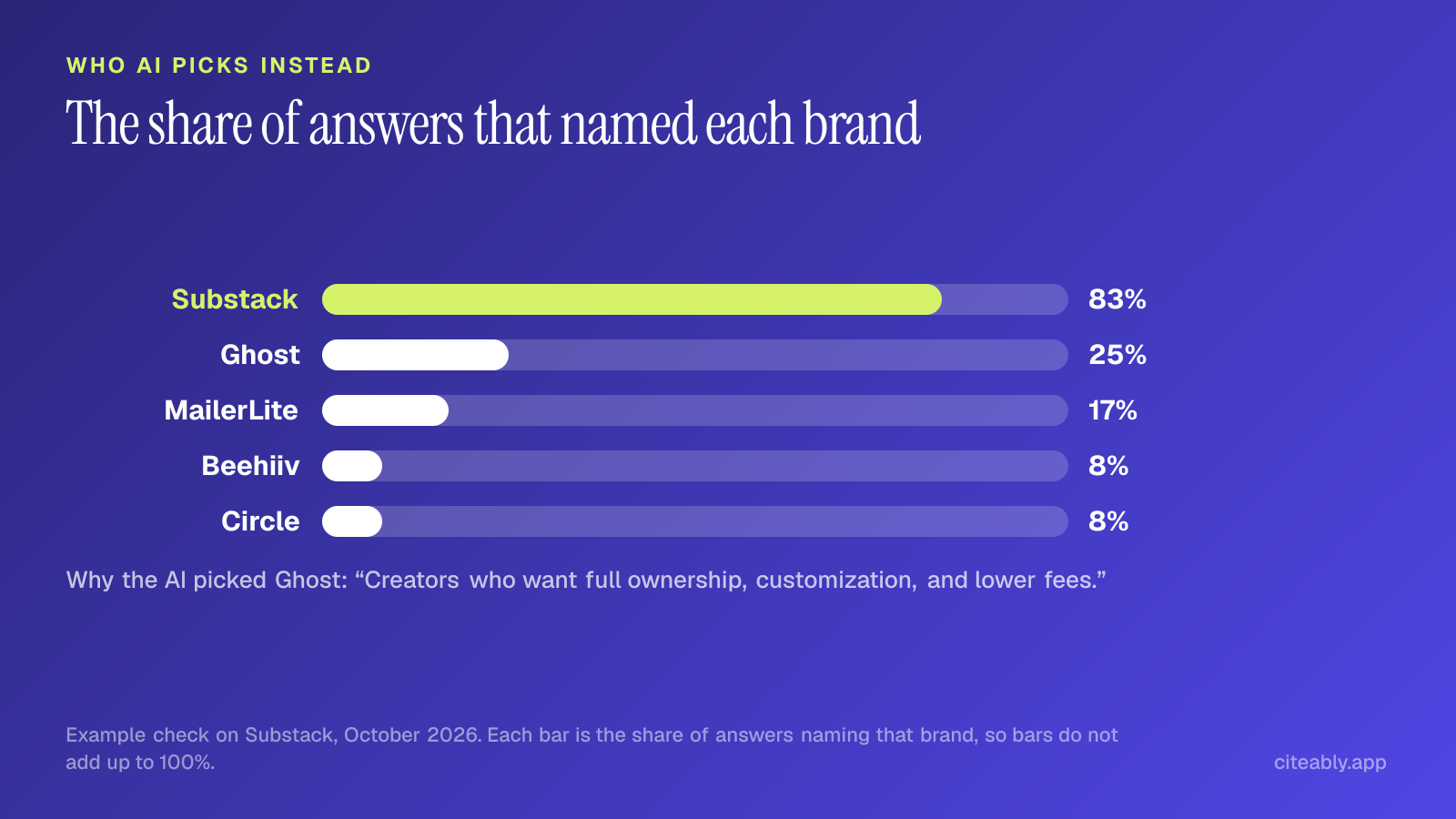
3. Who the AI names instead
In the same answers, the share naming each brand: Substack 83%, Ghost 25%, MailerLite 17%, Beehiiv 8%, Circle 8%.
The report also shows the reason the AI gave for picking a rival. For Ghost it said, in the engine's own words, creators who want full ownership, customization and lower fees. That sentence is the brief for your client's next page: it tells you what the AI believes sets a competitor apart.
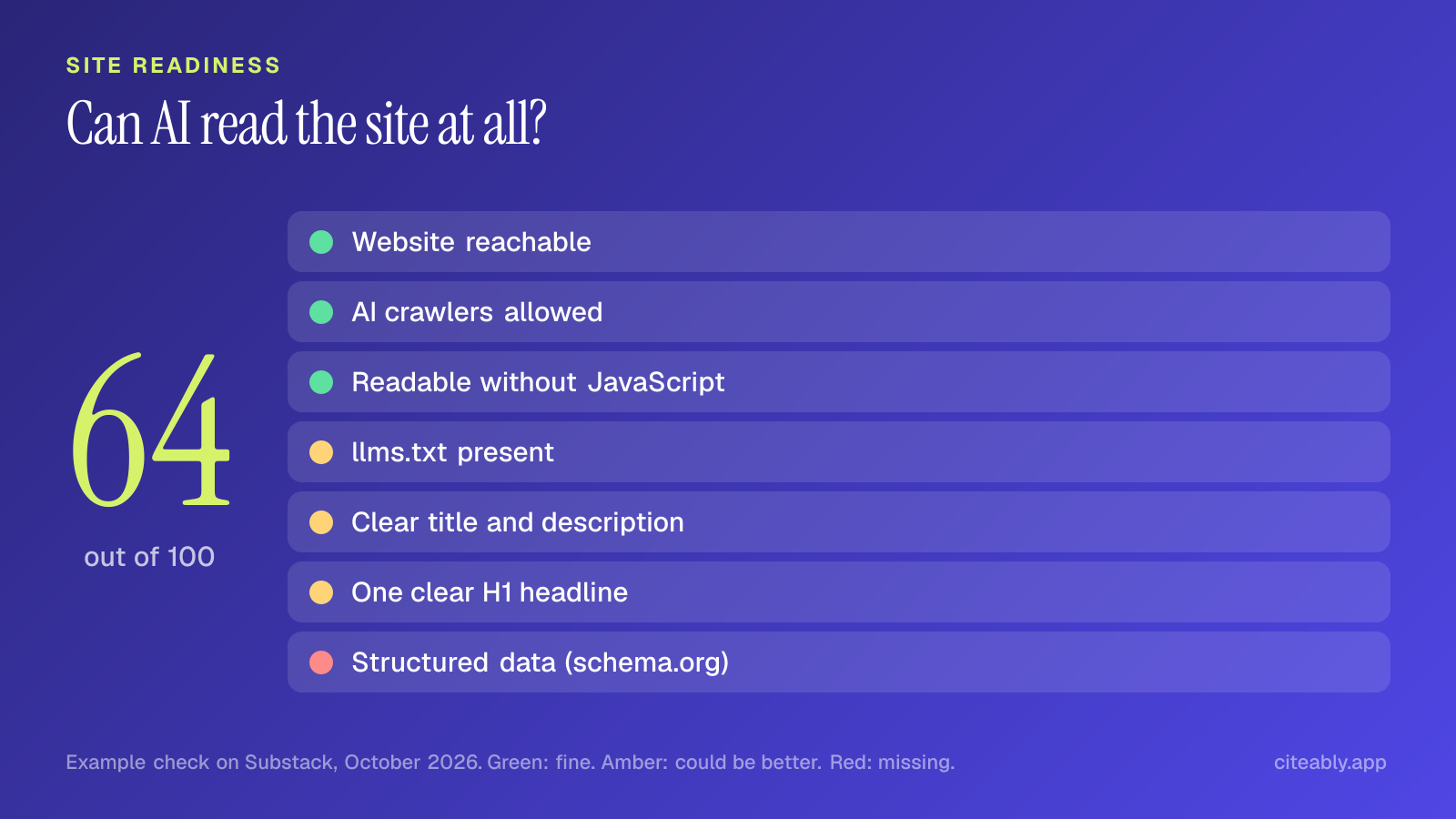
4. Whether the site can be read at all
This check scored the site 64 out of 100 for AI readiness. Three checks passed (reachable, AI crawlers allowed, readable without JavaScript). Three could be better (no llms.txt, a title and description that could be clearer, no single clear H1). One was missing: structured data (schema.org).
These are the basics. They don't promise to get anyone named, but a site an AI crawler can't read has no chance.
5. A fix, not just a diagnosis
A list of problems is easy to produce. A useful report gives the first fix ready to paste: a draft llms.txt, structured data, and the page for a question the brand isn't named for. Then it checks that the fix is live.
6. Branded as yours
For an agency, the report should say “Prepared by” your name, with no vendor branding, and show what changed since the last check. A weekly re-check is what turns a one-off snapshot into a service you can bill for.
What no report can promise
Nobody can promise a position in AI answers. A report can show where a brand stands, who is winning instead, and what to change, and then measure whether it moved.
Frequently asked questions
Why does a report show a range and not one number?
Because it is based on a small sample and AI answers change from run to run. “10 of 12, could really be 55% to 95%” is more honest than a bare 83%.
Can I put my agency's name on it?
Yes. On the Agency plan the report says “Prepared by” your agency and carries no Citeably branding. A free 15-day pilot on three of your clients is open to the first agencies.